
FREE LESSON / FROM THE HARMONY KIT
Borrow the
minor iv chord.
Borrow a minor chord. Hear how one falling note changes the return to C major.
01 / LISTEN
Follow the falling note.
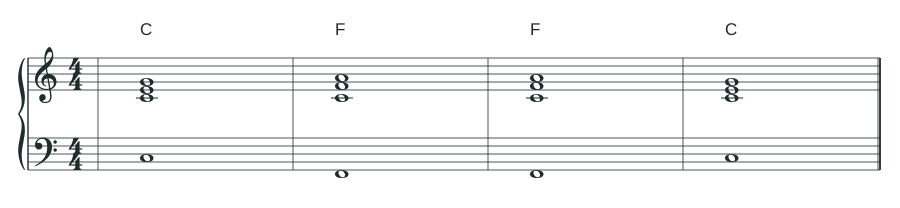
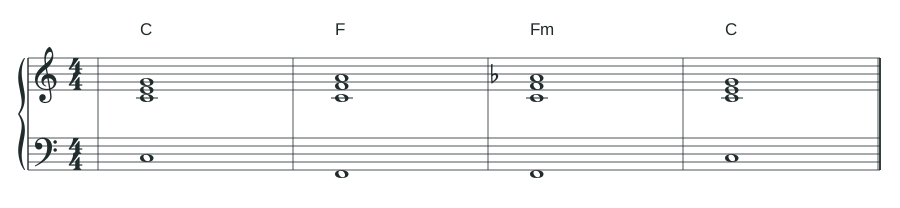
Listen for A–A♭–G across F–Fm–C. The middle chord changes by only one note, but the path back to C takes on a different color.
F → Fm → CA → A♭ → G
02 / UNDERSTAND
Where did that A♭ come from?
The Before version uses F major before returning to C. The After version starts with F major, changes it to F minor, and then returns to C. Only one note changes between F and Fm: A moves down a half step to A♭. Keep F and C in place and you can hear exactly what the minor chord contributes.
F major is built on the fourth note of C major. The minor version, Fm, belongs to C minor: a key with the same home note, C. Using that chord while C major remains home is called borrowing from the parallel minor. The small Roman numeral iv means a minor chord on the fourth scale degree.
The example does more than make F minor. Its upper line continues from A to A♭ to G over the final C. That descending line helps connect the borrowed chord to home. If you change the voicing, listen for that line somewhere inside the chords instead of assuming the chord name alone produces the effect.
03 / PLAY
Play it
Play F with F in the bass and C–F–A above it. Move only A to A♭ to make Fm. Then play C in the bass with C–E–G above it. Sing A–A♭–G while you play the three chords.
Repeat with C held as your melody over all three chords. C fits F, Fm, and C, so the accompaniment now carries the descending line. Compare the two versions: a melody that follows the changed note makes the movement obvious; a common melody note lets the harmony change beneath it.
More theory (optional)
C major and C minor are parallel keys: they share C as their tonic. Borrowing Fm from C minor gives IV–iv–I. IV names a major chord on the fourth scale degree; iv names a minor one.
Guitar shapes
Standard tuning, low E to high E. Numbers are frets; x means mute and 0 means open.
C: x32010 / F: 133211 / Fm: 133111
Try the chord change with a melody.
Play C–F–Fm–C, one chord per bar. Over the final three chords, sing A–A♭–G. Repeat until you can hear that line without needing the note names.
Now hold C as the melody over F–Fm–C. Keep the chords and rhythm exactly the same. Listen to where your attention goes: to the descending melody, or to the chord changing underneath a steady note? Choose one version and write what you hear.
Try the borrowed minor chord in a phrase of your own that already uses F before C. You can use Fm for the whole F bar or only its last two beats. Compare both timings. Optional: move the idea to G–C–Cm–G with E–E♭–D, or D–G–Gm–D with B–B♭–A.
Example answer
With A–A♭–G in the melody, the listener hears the exact note that turns F major into F minor and then connects it to C. A held C belongs to all three chords, so the same harmonic movement happens underneath the melody. For a shorter borrowed chord, try C(4), F(4), F(2), Fm(2), C(4). Neither melody or timing is the correct version; choose the one that serves your phrase.
Listen for the melody, too.
Hold A over F, then keep it over Fm. Listen to A against A♭. You can move the melody to A♭ or C if you want those notes to agree.
Use it in your music
Try a minor iv before the final tonic of one phrase. Leave the next phrase unchanged. Decide whether that contrast makes the borrowed chord more effective.
Find the ending C-Cm-G. Sing the changing note and compare it with this lesson in C major.